
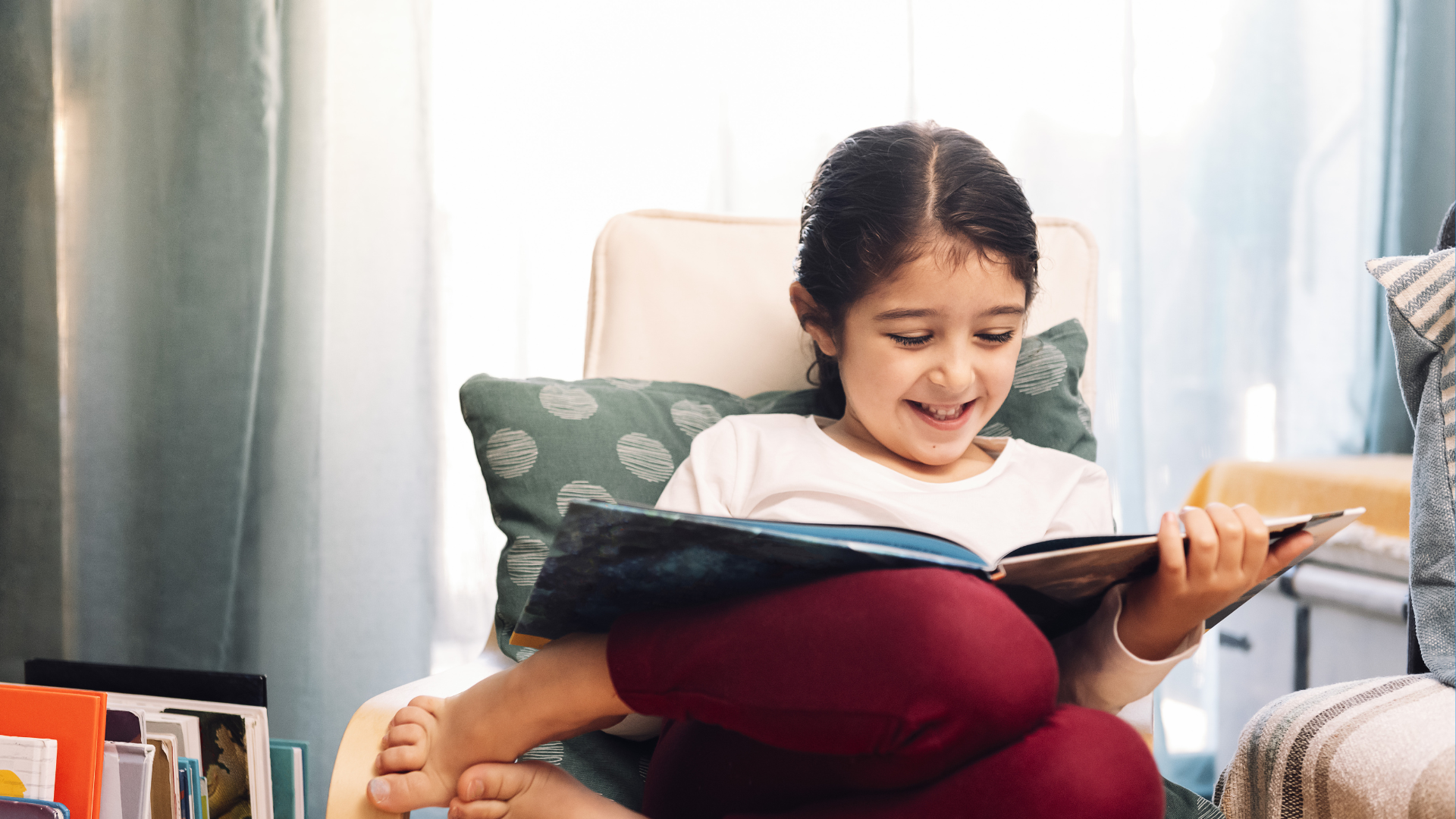
This is a guest post from Anna Chirillo, an upper-elementary ELA teacher at Think Academy.
Your child gets home, drops the backpack and heads straight for a snack. Then you mention reading, and suddenly, even ten minutes with a book sounds like a very big request.
That does not necessarily mean your child dislikes reading. After a full school day, many elementary kids may need some time to reset before they are ready to focus again. A low-stress after school reading routine can make books feel less like one more assignment and more like a calm, predictable part of the day.
You do not need a perfect reading nook, a complicated reward system or a long block of time. Start with a book your child wants to open, a comfortable place to sit and a routine your family can realistically repeat.
Why After-School Reading Can Feel Hard
Elementary students use a lot of energy during the school day. By the afternoon, your child may be hungry, restless, tired or eager to make their own choices. Asking them to begin reading the moment they walk through the door can quickly turn a positive habit into a daily argument.
The book itself may also be part of the problem. A book with lots of unfamiliar words can feel frustrating, while one that doesn’t match your child’s interests may be hard to stick with. Even the right book can become less enjoyable when reading comes with too much pressure.
Sometimes, the problem is not reading. It is the timing, the book or the amount of pressure surrounding it.
Before beginning, give your child a chance to eat, move around or enjoy a little quiet time. A short transition can make a noticeable difference in how willing they are to settle down with a book.
Set Up an After-School Reading Routine That Feels Inviting
A reading space does not have to look like a picture-perfect home library. It simply needs to feel comfortable and easy to use.
Choose a spot with good lighting, a place to sit and as few distractions as possible. Keep a few books nearby so your child does not have to search the house each day. For digital reading, have the device charged and ready before reading time begins.
Then offer choices. Your child might reach for a chapter book one day and a comic, magazine, nonfiction title or ebook the next. Whether the book comes from a shelf or from Epic, interest matters. Giving kids some choice in what they read can help build motivation and make reading more enjoyable.
The book should also feel doable. Your child may meet a few new words, but they should still be able to follow the main idea without needing help in every sentence. Not every book has to be difficult to be worthwhile. Familiar books and favorite series can help children read with greater confidence and expression.
Keep the first routine simple:
- Take a few minutes to reset after school.
- Read for a clear, manageable amount of time.
- End by sharing one thought about the book.
For many elementary students, 15 to 30 minutes may be a useful range. A reluctant or younger reader may need to begin with just 10 minutes. That is okay. The routine matters more than the number on the timer.
Before Reading: Take a One-Minute Look
Before your child begins, spend a minute looking over the book together. This small step can make the text easier to enter.
For a story, look at the cover, title and illustrations. Ask:
- “What do you think might happen?”
- “What do you notice about the character?”
- “Does this remind you of another book?”
For nonfiction, look at the headings, photographs, captions or diagrams. Try:
- “What do you already know about this topic?”
- “What are you hoping to learn?”
- “Which part looks most interesting?”
The prediction does not need to be correct. It simply gives your child something to think about while reading.
Keep the preview quick. You are opening the door to the book, not beginning a lesson before the first page.
During the After-School Reading Routine: Stay Close, Not Too Close
Some children want to read independently. Others are more comfortable when a parent stays nearby or reads with them. Both options matter.
For a developing reader, try reading one page aloud first. Let your child hear how you pause at punctuation, change your voice for dialogue and slow down when a sentence becomes important. You can also take turns reading by page, paragraph or character.
When your child struggles with a word, give them a moment to look at it again. They may notice the mistake and correct it on their own. If they get stuck, give them a moment to try again before offering help. Try not to interrupt for every small mistake, especially if they’re still following the story.
Support the reader. Do not manage every sentence.
You also do not need to discuss every page. Pause once or twice at a natural stopping point and choose one useful question:
- “What just happened?”
- “Why do you think the character did that?”
- “Which detail seems important?”
- “What makes you think that?”
- “What do you think you will learn next?”
When something does not make sense, show your child what readers do. Go back to the sentence. Reread the previous paragraph. Look at the illustration, heading or caption. Talk through the confusing part together.
Strong readers do not understand everything immediately. They notice their own confusion and know what to try next.
After Reading: Keep the Ending Light
Reading time does not need to end with a worksheet or a long list of comprehension questions. One quick response is enough to help your child think back over what they read.
Let your child choose how to respond:
- Tell you the funniest, strangest or most exciting part.
- Retell what happened first, next and last.
- Share one new fact.
- Draw a favorite scene.
- Act out a moment using character voices.
- Give the book a rating and explain it.
- Recommend the book to someone else.
Younger children may enjoy drawing or acting. Older elementary readers may be ready to explain a character’s choice, identify an important detail or show where the text supports an idea.
Follow your child’s energy. You do not need to complete an activity every day. Sometimes the best way to end reading time is simply, “Let’s keep going tomorrow.”
Finish with specific encouragement. Instead of only saying, “Good job,” notice what your child did as a reader:
“You went back when that part became confusing.”
“You changed your voice when the character spoke.”
“You used the picture to figure out what was happening.”
Specific praise can help children notice the reading strategies they used and try them again next time.
How an After-School Reading Routine Grows With Your Child
A simple reading routine can grow with your child. Younger readers may focus on reading smoothly, learning new words and talking about what happened in a story.
As books become more complex, those same habits can help kids learn to reread confusing parts, notice important details and explain what they understand.
You don’t need to build all of those skills at once. Start with a book your child wants to read, a few calm minutes and a routine your family can repeat.
Building a Reading Habit That Lasts
Not every afternoon will go smoothly, and not every book will hold your child’s attention. That’s part of becoming a reader.
The goal isn’t a perfect routine. It’s creating positive reading experiences that can help books become a familiar part of your child’s day. Start small, keep the pressure low and let your child’s interests help lead the way.

About the Author
Anna Chirillo is an upper-elementary ELA teacher at Think Academy with over 10 years of experience helping students strengthen reading comprehension and critical thinking skills. She is also a homeschooling mom of four who is passionate about helping children dig deeper and understand the “why” behind what they read.
Frequently Asked Questions
▶ How long should kids read after school?
For many elementary-age kids, 15 to 30 minutes can be a manageable goal, but there’s no need to start there. A younger or reluctant reader might begin with just 10 minutes. What matters most is choosing an amount of time your family can realistically repeat without making reading feel like a chore.
▶ Should kids read right after they get home from school?
Not necessarily. Some kids need a snack, movement or a little downtime before they’re ready to focus again. Pay attention to when your child seems most settled, then try building reading into that part of the afternoon. A short reset can make reading time feel much easier.
▶ What should I do if my child doesn’t want to read after school?
Start by figuring out what’s making reading difficult. Your child may be tired, the book may be too challenging or they simply may not be interested in the topic. Try offering a few choices, including graphic novels, nonfiction, ebooks or a favorite series, and keep the first reading sessions short and low-pressure.