We know that kids who readily reach for books become more confident readers. And confident readers are more likely to have a healthy appetite for books. It sounds circular but it makes sense. We tend to like activities we feel good at, and kids are no different when it comes to reading. But research shows that only 35% of 4th graders can read at or above their grade level. How can you help close this gap with your own kid? Here’s what you need to know.
How Kids Learn to Read: 2 Points of View
There are currently two dominant approaches as to how to best introduce kids to reading.
Approach #1: 3-Cueing
Starting in the 1960s, many researchers have concluded that learning to read hinges on a “whole-word” approach: guessing at what a word is by relying on three cues:
- Semantic (word meaning and sentence context)
- Syntactic (grammatical features of the word)
- Grapho-phonic (letters and sounds).
This is called the 3-cueing system. In the simplest terms, the idea is to give kids prompts like “look at this picture and try a word that makes sense.” Let’s say it’s an image of a horse, and a child identifies it as a pony. Close enough, right? It might be considered acceptable because it shows a basic understanding of what the accompanying word means. That’s just one example. The approach is still in use today, and you may even see 3-cueing activities like this in your kid’s homework folder.
But… There are some problems with this. For one, kids can become overly reliant on pictures, and as seen in the horse-pony example above, could get the word wrong or feel lost without that extra visual context. Here’s an alternative approach.
Approach #2: Phonics
As opposed to identifying words in their entirety, phonics teaches kids how to decode individual letters into sounds, then blend the sounds into words. While more challenging than learning by guessing, when you consider the fact that language is code, it makes sense to think of reading as a form of code deciphering. Letters are symbols in a code, and when we learn what each symbol sounds like, we can crack it. Pretty cool (and fun!), right?
Once kids learn how to decode single words, they can decipher patterned groups (sentences) and the process of understanding—and enjoying—stories and other content begins.
So, Where Do We Stand?
At Epic, we’re team phonics. Why? Simply put, language is complicated. Having the ability to decode symbols (letters) and sounds puts kids at an early advantage when learning to string together and derive meaning from entire words.
“Learning letter-sound correspondence (the relationship between letters and their sounds) gives kids the tools to decode independently and fuels their confidence to challenge themselves.”
Epic Educator Relations Manager Katy Jao
Examples of letter-sound correspondence include being able to discern the difference between:
- Different-meaning words that sound the same but are spelled differently, like “by,” “buy” and “bye.”
- Different-meaning words that sound the same but are spelled the same, like “waves” in the ocean versus “waves” of the hand.
- Common concepts like “ballerina” versus “dance,” or to use the above example: “horse” versus “pony.”
You get the picture. Sure, we can pick up these nuances later on, but we’re likely able to pick them up earlier, faster and more skillfully when starting with decoding versus a whole-word approach.
5 Tips to Help Them Learn
1. Embrace Read-Alouds
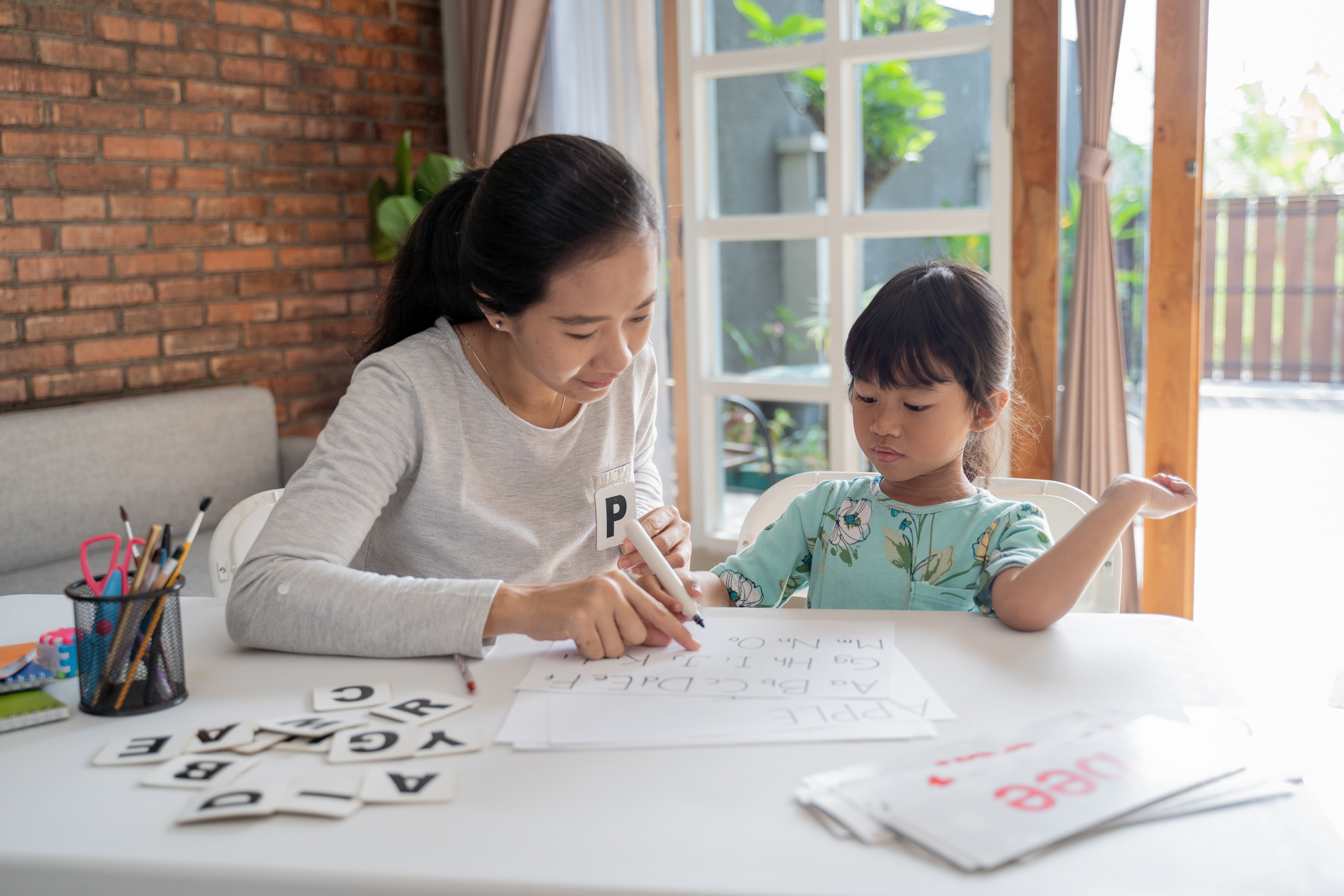
Reading together helps build vocab by exposing them to a wide variety of words. As they come to understand the meaning of more and more, they can start to string together sentences and eventually entire stories. Help them sound out the letters to connect the symbols to the sounds.
2. Use Clues
Spend time every day helping them sound out a new word, and be patient. Challenge them, but if they get stumped, use visual cues to give them a hint and try to reduce their reliance on images over time.
3. Use Phonics Books
Phonics books are storybooks, rhyming books, ABC books, workbooks and others that target one specific letter or sound. You can get unlimited access to a huge assortment of phonics books on Epic with an Epic Unlimited subscription. Plus you can check out numerous educator-created collections of phonics books, like this one and this one.
4. Discuss What You Read
Studies show that when kids get to use new words learned from a book in different contexts like discussions, casual conversations or drawing exercises, their comprehension grows.
5. Incorporate Sight Words
Sight words are words that kids recognize instantly because they see them so much (even though they might be tricky), like “the,” “and” and “does.” Building a large base of these words will go a long way in helping your kid learn to read. Check out one of our educator-created sight words collections on Epic.
The bottom line?
Reading opens doors for future happiness, empathy, connection, success—and it begins with learning the basics and feeling more and more confident over time. So start with phonics. Growing their vocab and comprehension will grow their reading swagger. The more confident they feel, the more eager they will be to reach for more books.