
Building Communities With Crosscutting Concepts
A few years ago I learned about the crosscutting concepts and how they can be used in multiple different science standards, as well as how they bridge into other subject areas such as social studies and ELA. This inspired me to look across disciplines to see how I could use the standards to promote meaningful cross-curricular learning, as well as maximize my time for instruction.
Mission: Create the Best Community Possible
Cross-curricular learning not only touches on multiple required standards, but it can also include technology-rich STEAM and PBL opportunities that allow student voice and choice to be clearly shared.
One of the first cross-curricular units I attempted was to challenge my first grade students to create the best community they could using the crosscutting concept of cause and effect, and tying together science, social studies and ELA standards. For this project, required standards were met with guidance but student voice and choice was still evident and maximized.
Planning the Community
To begin, students used Epic! to learn about different types of communities (rural, urban, suburban, etc.) and the people (producers and consumers) that live and work in them to meet our wants and needs by providing goods and services.
Together, the class brainstormed a list of businesses and producers that would be needed to begin our very own town.
Next, students chose one community helper to research and share what goods and services or wants and needs those businesses and people would provide.
Building Our Town
In groups, they constructed mini 3D versions of buildings to go along with their research and then shared their information using Green Screen by DoInk to create green screen videos.
After the videos were created, students began to learn about maps using more resources from Epic! and created drafts of possible maps for our town. They used Buncee because they love the stickers and the amount of creativity the app allows. Once they were completed, student pairs shared their drafts.
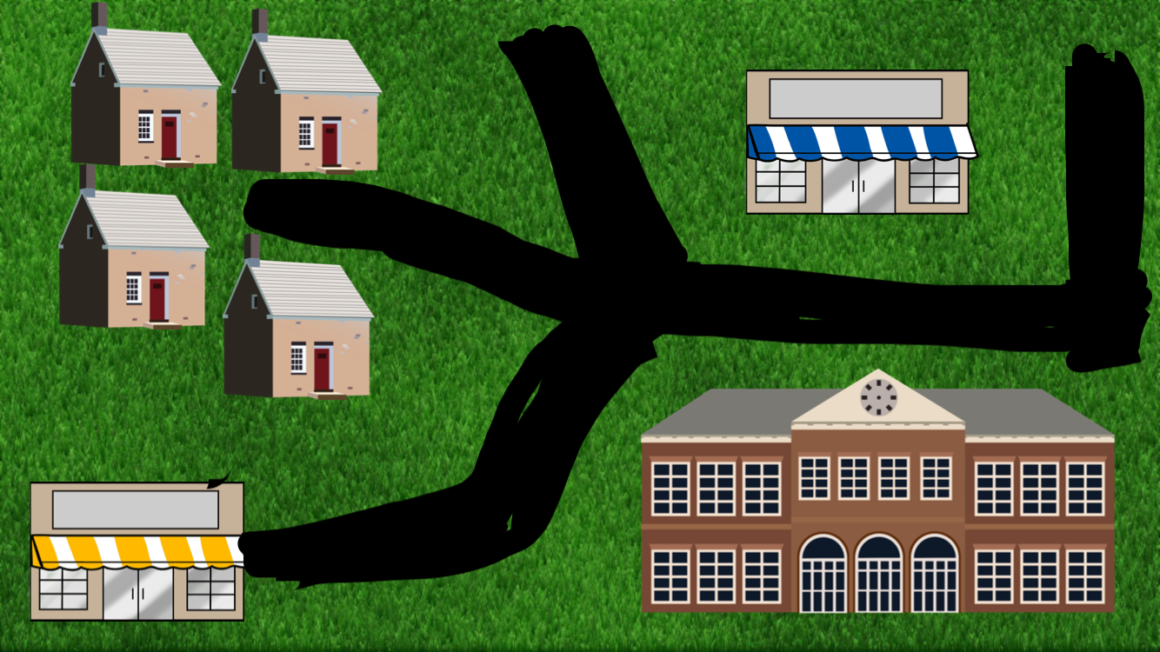
As a class we voted on which ones we liked the best and used them to collaboratively create a map of our mock community. Using the map, students then began to set up our mini 3D version of the community with the buildings they had created.

After students set their buildings out, I congratulated them on a job well done but then paused and asked, “Is it done? Is this the very best community we can make or can we make it better?”
Learning to Affect Positive Change
Within seconds, I got resounding responses of, “No! It needs … We could … and I think … because …”
I was so excited that students already had some ideas on how to improve upon our community! I wanted to get all of them on paper fast and add them to our community. So, of course we sat down and made a fast anchor chart of their requests for community improvements.
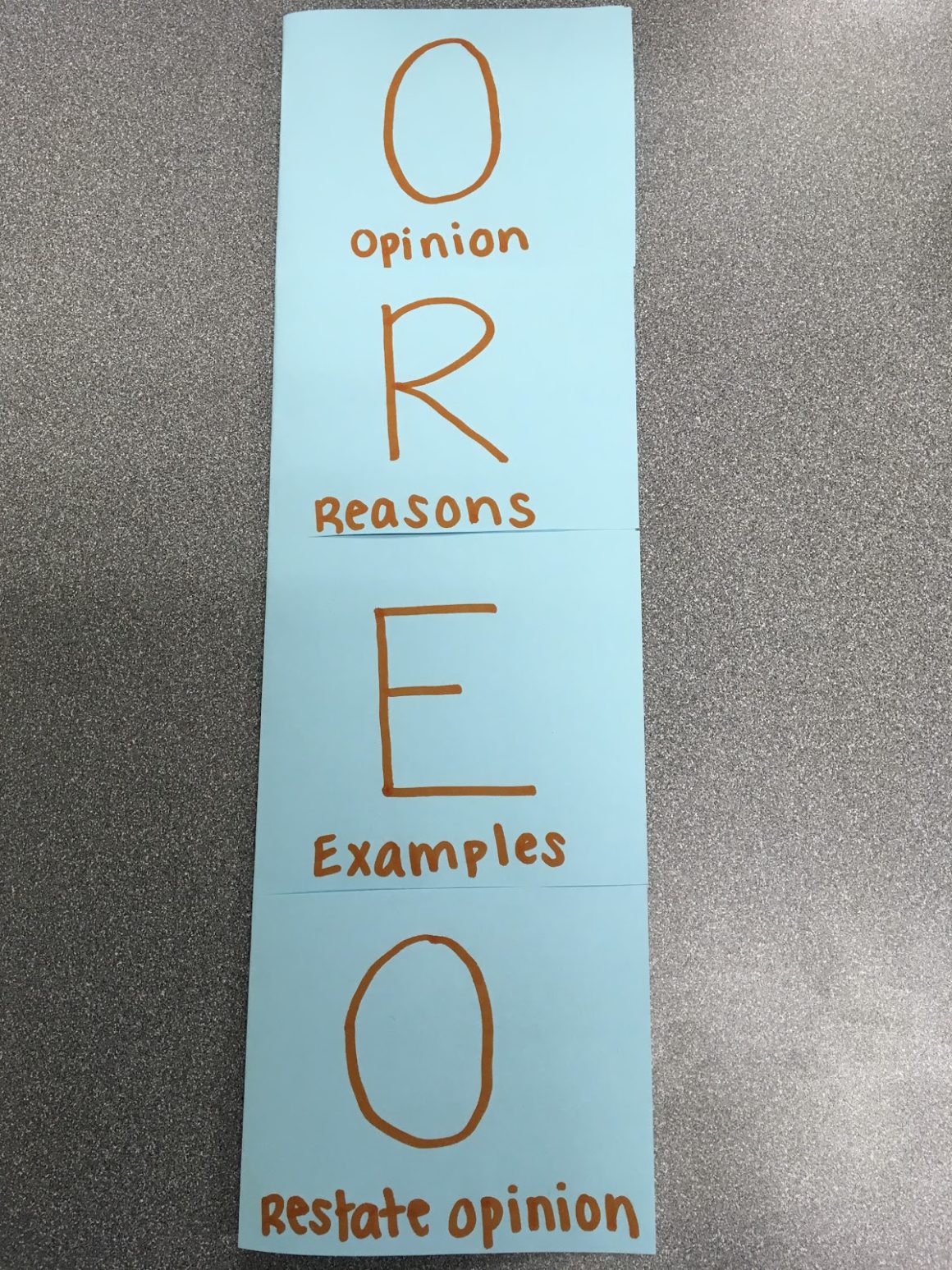
Once the chart was constructed, we used Epic! to learn a bit about what a citizen is, what city council is and what they each do for communities. Students were then challenged to petition city council (me) for positive changes using our previously learned opinion-writing format.
The big rule was, they had to have research-based examples or evidence from Epic! or another safe site in their letters to me to back up their requests and prove they were positive.

This met some of our science standards about how humans have an impact on our environment, and students quickly found out what positive and negative impacts people can have on the environment. They were so excited to begin! I have never seen my first-graders draft persuasive letters so fast and dig into nonfiction text so well. They were on a mission because if their letters were well written with solid text evidence, they were granted permission to construct their desired improvements and add them onto our mock mini 3D community.
Going Beyond the Lesson
Throughout the process I continued to apply crosscutting concepts, doing both science and social studies mini lessons about natural resources, conservation, preservation, pollution and how citizens can have a positive impact on their communities with various texts from Epic!. This helped students build their background knowledge, introduce important topics that their persuasive letters may not even have been about and find new connections and ideas for their requests.
At the end of the entire unit, the community the students created was one that met needs, was environmentally friendly and was well planned out. They got to scan each other’s Seesaw QR codes to hear each other’s letters for all requests made and what text evidence was provided. It was truly a meaningful culmination to applicable learning for students.
About the Author

Renee White is a first-grade teacher at Herbert Akins Road Elementary School in Fuquay Varina, NC. She has been teaching in elementary education for 18 years and has taught many different grades. She’s AIG certified and has a Master’s Degree in Reading. She’s originally from Ohio, where she attended Bowling Green State University for both her undergraduate and graduate work.
Renee spent three years cheering on the Falcons as a varsity cheerleader at BGSU, and was an assistant cheerleading coach during graduate school. She enjoys seeing children learn, explore, create and problem solve. She’s a big fan of STEAM (Science, Technology, Engineering, Art and Mathematics) in education, genius hour, makerspace, innovation and learning from failures.
Be a Spark Contributor!
Do you have innovative ideas or inspiring stories to share with your fellow Epic! Educators? Be a guest author for Spark!
Submit your topics and ideas to spark@getepic.com.
Be sure to check out these guidelines before submitting your post.