The Inner Planets

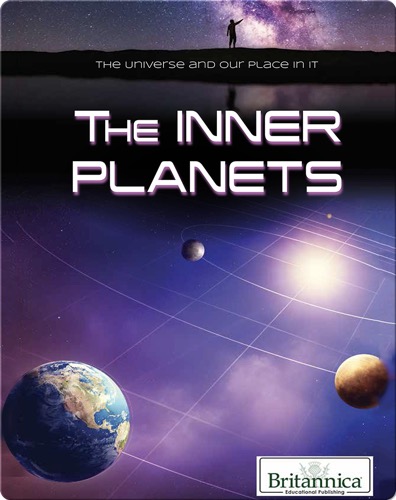
The Inner Planets book cover
Introduction 6 Chapter1 Mercury 9 An Introduction to Mercury 10 The Challenges with Observing the Planet 12 Mercury’s Orbit and Rotation 14 Mercury’s Atmosphere 17 The Planet’s Magnetic Field and Magnetosphere 19 The Surface of Mercury 21 Plains 24 Scarps 25 The Composition of the Surface 28 The Planet’s Later Development 28 How Mercury Formed 30 Chapter2 Venus 34 Understanding Venus 35 Venus’s Atmosphere 39 CONTENTS
The Inner Planets

The Inner Planets

The inner planets, Mercury, Venus, Earth and Mars, are important for study because they are so similar. All are terrestrial, meaning they have a solid surface. Mercury, being closest to the Sun, experiences the most intense solar radiation. Venus is an example of an extreme greenhouse environment, with temperatures nearing 1,000 degrees Fahrenheit. Mars offers us great hope for finding an environment that could have harbored extraterrestrial life. This book follows the Next Generation Science Standards focusing on the Earth and the solar system and shows readers that we can learn a lot about our own planet from our celestial neighbors.

About This Book

By: Nicholas Faulkner
Illustrated by: Erik Gregersen
Published by: Encyclopaedia Britannica, Inc.
9-12Age Range
- AR
126Pages
ScienceSubject
-Lexile
2-3 hoursReading Time
-Guided Reading
-Fountas & Pinnell
-DRA